
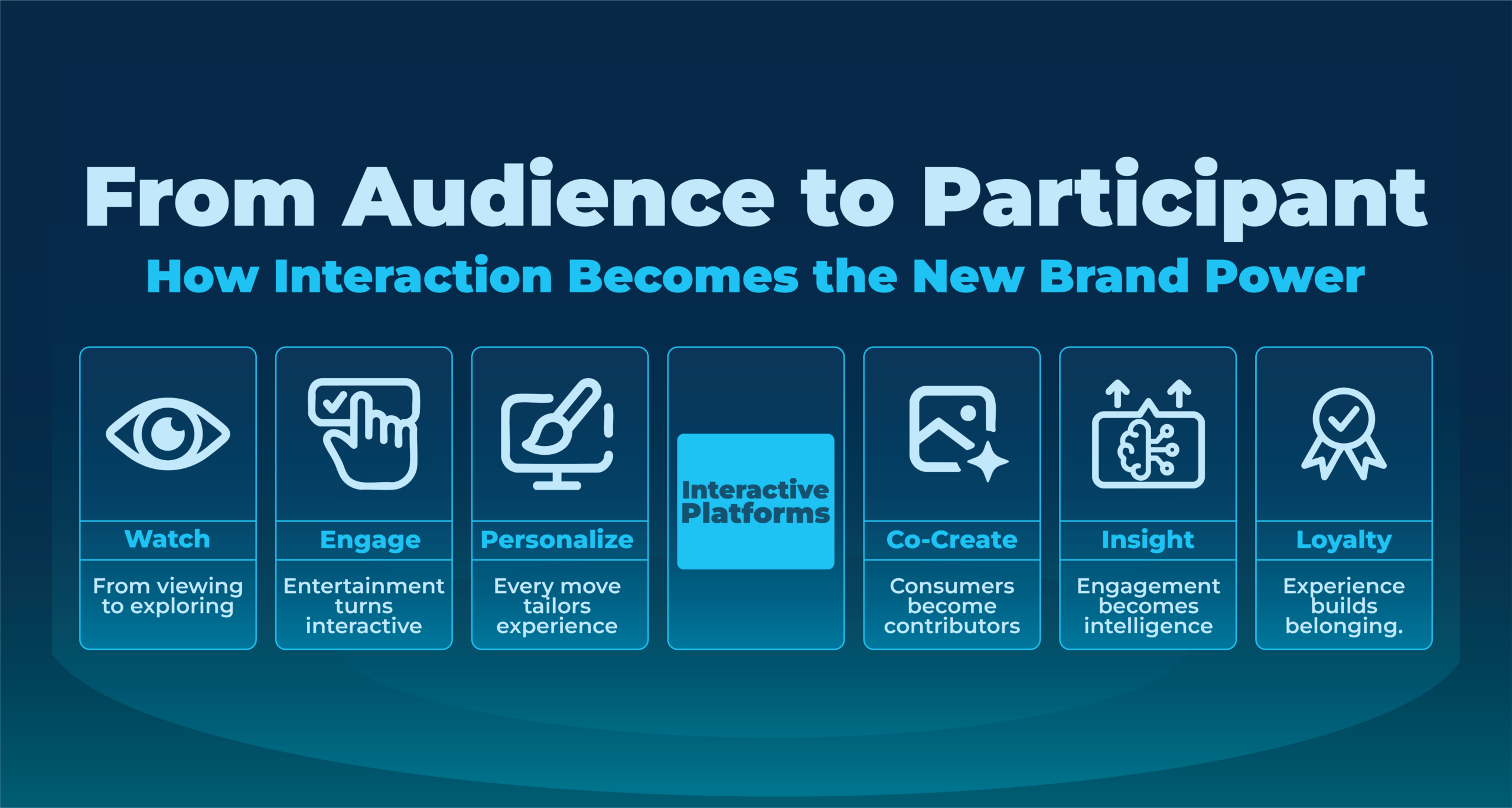
Beyond Entertainment – What an Interactive Platform Can Offer Brands
What if your audience truly engaged with your brand, not merely viewing it, but actively shaping and sharing it? In the age of viral memes, infinite scrolls, and binge-worthy content, brands are no longer confined to traditional marketing tactics. The true value of a beyond entertainment interactive platform for brands lies in building trust, belonging, and measurable impact beyond traditional advertising. Interactive platforms, ranging from immersive apps to gamified social experiences, are transforming the way brands engage with their audiences. Beyond mere entertainment, the platforms have proven to be better sources of actionable insights and have become powerful search engines.
Transforming passive viewers into active participants is the primary goal of interactive platforms, where consumers are not just watching; they are also co-creating. These platforms are becoming the ultimate brand accelerators, where the real strategy lies in engagement, personalization, and community. By leveraging a beyond entertainment interactive platform for brands, organizations can move beyond passive visibility and foster meaningful engagement. Consider a sneaker or reading-glass try-on experience that lets customers test limited-edition products from the comfort of their own homes. Or a food company that enables you to customize your burgers through your laptop while raving for it at 11 pm. Serious crowd-sourced developments revealed a small secret to increasing engagement: consumers enjoy playing along.
According to “Forbes,” more than 81% of marketers claim that calculators, tests, votes, and other forms of interactive content are significantly better at grabbing the interest of viewers than static information. That is why an interactive piece of content is ideal for expanding the contact base and attracting prospective consumers. (1) Interactive platforms can now offer immersive experiences that allow customers to co-create content, participate in challenges, or even influence product design. This level of engagement fosters deeper brand loyalty, generates authentic user-driven promotion, and positions brands as dynamic, approachable entities in a competitive digital landscape.
Interactive platforms are not just playgrounds; they are brand-building supertools. Here, interaction is the new transaction, and every attention is currency. Interactive advertising enables experience design by making marketing more gamified and uniquit’so it’s memorable. According to McKinsey and Company, 71% of customers prefer customized interactions, and 76% feel disappointed when corporations fail to provide them (2)
Want to launch a new coffee? Hide QR codes in between lines or build a puzzle where each level reveals a new flavor. That way, entertainment becomes the bait while interaction becomes the hook.
During a Q&A session, IBM’s Jeremy Hlavacek highlighted that AI personalizes experiences, improves analytics, and enables predictive audience segmentation. (3) AI delivers personalized content and interactions in real time based on user behavior and preferences. It also strengthens analytics by uncovering deeper insights from data, helping platforms understand what truly resonates with their audiences. AI enables predictive audience segmentation, delivering the right message at the right time for more relevant and impactful interactions.
In essence, interactive platforms combine storytelling, community-building, and data analysis to spark conversations and create cultures. Brands that move beyond static billboards gain more than visibility; they build trust, belonging, and lasting loyalty. When people feel heard, represented, and involved, loyalty evolves from a transactional outcome into a sustained relationship. Brands that embrace this shift capture attention, build communities, and earn lasting cultural relevance with their audiences.