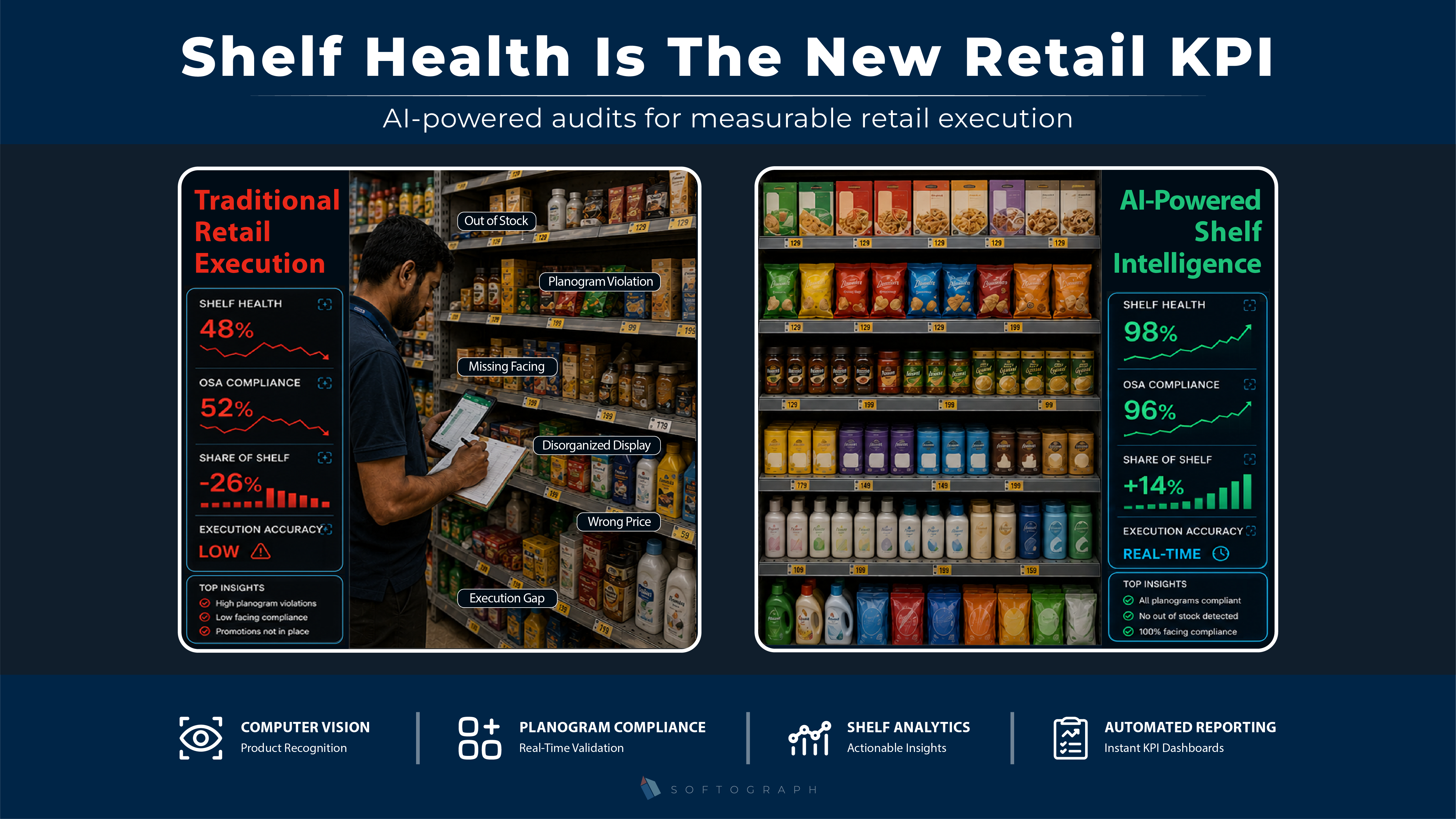
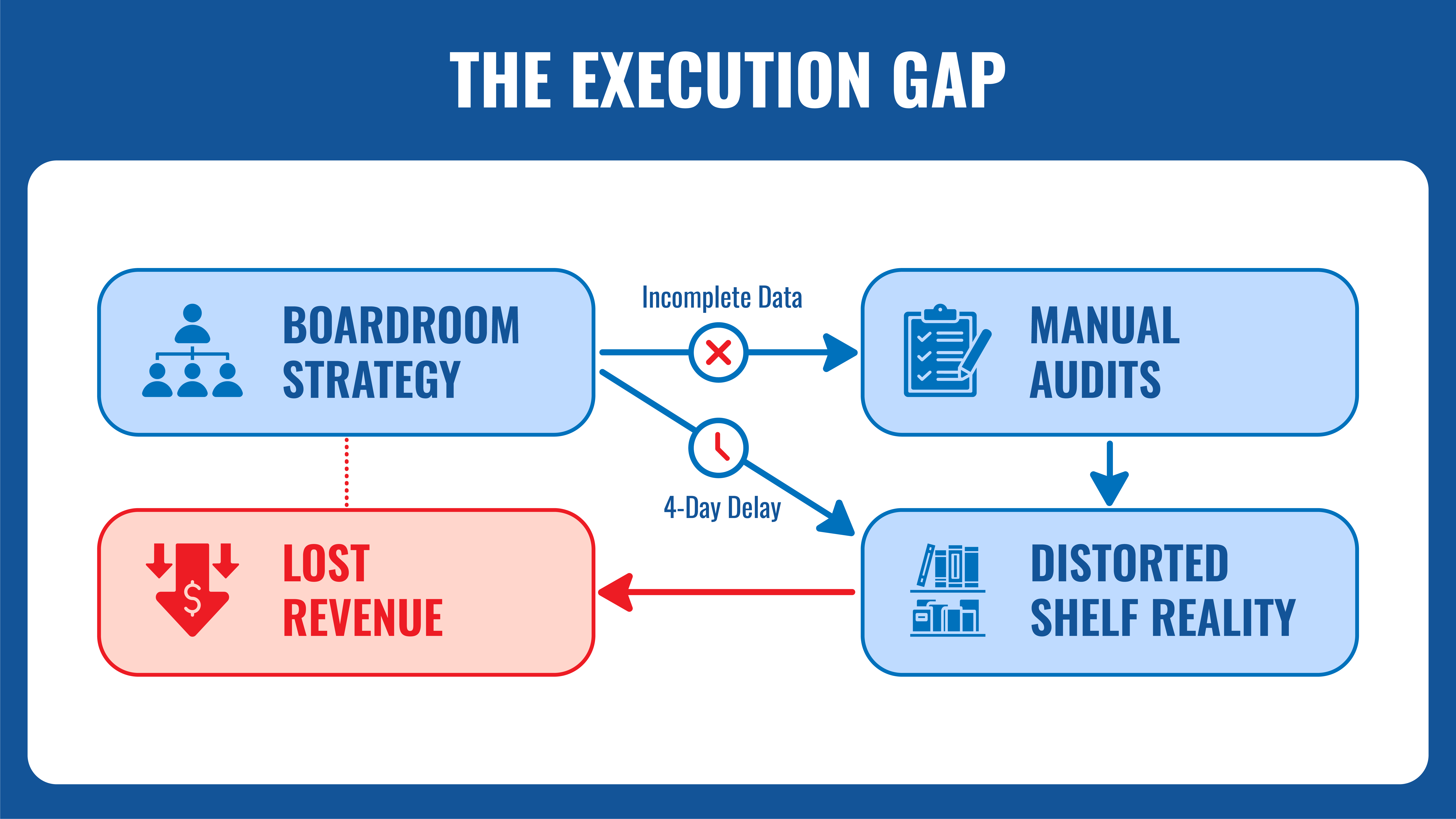
Millions are spent every year on trade marketing, premium display slots, and elaborate planograms. Yet, walk into any major retail outlet, departmental store, or local grocery hub, and the reality on the ground tells a different story. The reality on the shelves rarely matches the strategy designed in the boardroom. Out-of-stock items, misplaced products, and hidden SKU variations quietly drain revenue every single day.
For decades, consumer goods companies relied on volume metrics to measure success. Secondary sales data, primary dispatch numbers, and bulk delivery tallies dominated management dashboards. But high dispatch volume does not guarantee retail success. If products sit forgotten in a backroom or remain hidden behind a competitor’s aggressive display layout, the sale is lost.
Accumulating mass sales reports after the fact is no longer enough. Winning the modern retail game requires real-time visibility at the exact point of purchase. Shelf health is the ultimate KPI for modern retail execution, and artificial intelligence is completely shifting how brands monitor, measure, and master this critical metric.
Why Clipboard Audits Are Ruining Retail Data
Traditional retail auditing relies heavily on human intervention. Consequently, field agents visit stores armed with clipboards or basic mobile forms to manually count stock, check expiry dates, and verify price tags. This legacy process is incredibly slow, expensive, and highly prone to human error. For instance, counting hundreds of tiny items under poor lighting conditions inevitably leads to frequent mistakes.
As a result, by the time a manual audit report reaches management, the data is already obsolete. To illustrate, an out-of-stock situation that happens on Friday morning might not be flagged until Tuesday afternoon. In addition, a four-day delay means lost market share in fast-moving consumer markets. This happens because customers will not wait for a shipment to arrive. Instead, competitors quickly fill the physical gaps left on the shelves, permanently capturing loyal buyers.
Furthermore, manual audits completely lack objectivity. One field agent might log a messy display as perfectly compliant, while a stricter agent applies completely different standards to the same shelf. This inconsistency creates massive friction between brand teams, distributors, and retailers, resulting in endless debates over spreadsheet metrics rather than swift corrective action.
The Cost of Poor Share of Shelf
Share of Shelf directly impacts market share. When a product loses its dedicated physical space, consumer attention drops instantly. Shoppers rarely search for a hidden item; if a specific product is not visible at eye level, they simply buy an available alternative.
Poor shelf health leads to immediate, silent revenue leaks:
- Phantom Inventory: Systems show that stock is available in the store, but the product remains trapped in a back storeroom and never reaches the display.
- Planogram Non-Compliance: Retailers accept premium display fees but fail to arrange items in accordance with agreed brand guidelines, allowing rival brands to physically push their products aside.
- Pricing Friction: Missing or outdated price tags cause confusion at checkout, leading shoppers to abandon their purchases.
These issues cannot be solved by simply pushing more inventory into the supply chain. Flooding an inefficient retail ecosystem with extra stock only increases storage costs and ties up valuable capital. True efficiency comes from optimizing the exact moment the consumer encounters the product, ensuring every item is visible, correctly priced, and flawlessly positioned.
AI Visual Audits: The New Gold Standard via TradeEye
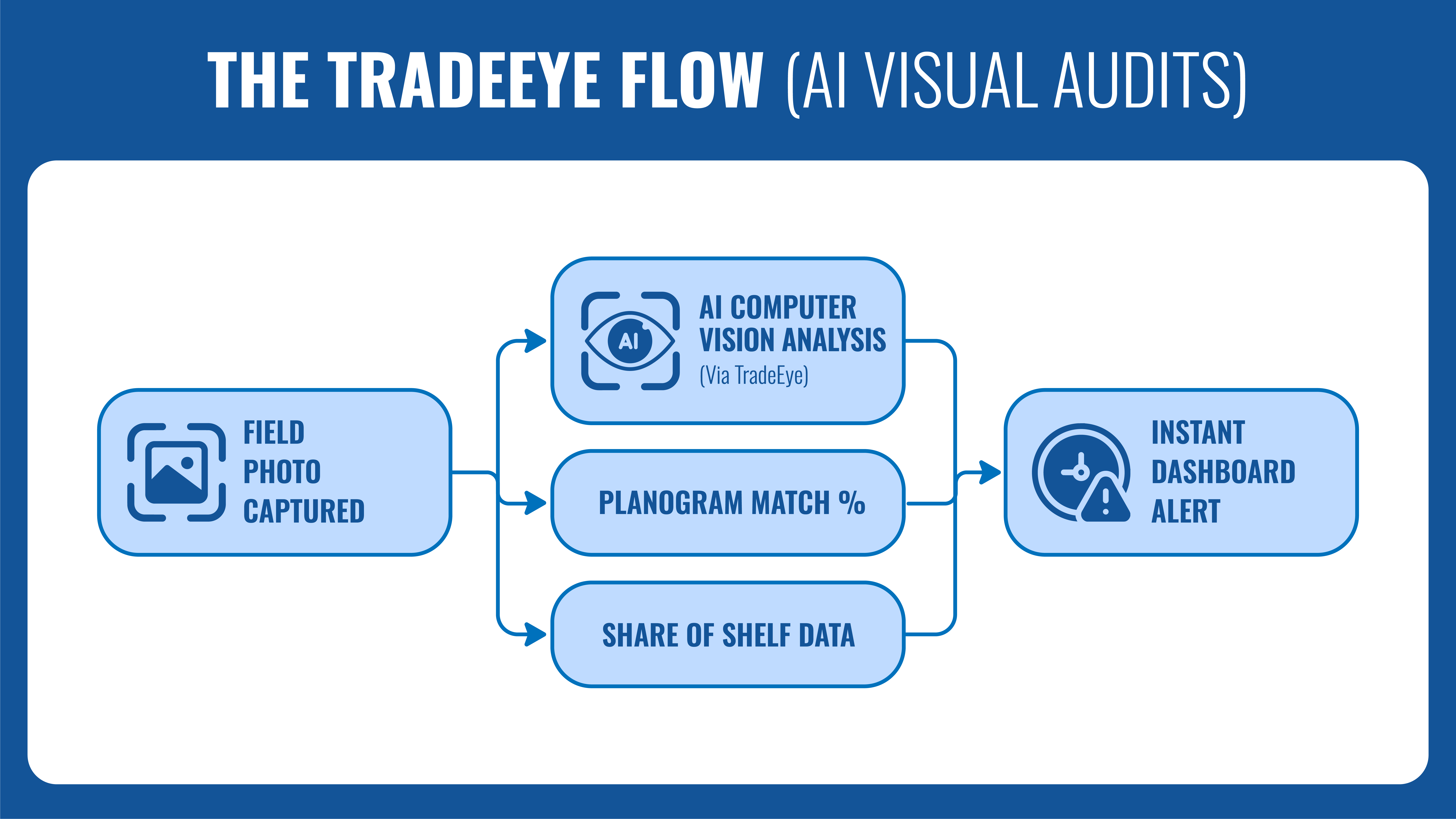
Artificial intelligence completely rewrites the rules of retail execution through automated image recognition. Instead of filling out tedious forms, field agents simply snap a quick photo of the retail shelf using their smartphones.
This is where advanced computer vision engines, like Softograph’s TradeEye, transform raw operations. TradeEye processes the shelf image instantly, utilizing advanced algorithms to execute immediate analysis:
- Absolute Execution Validation: The platform identifies every individual SKU and instantly calculates the exact Share of Shelf down to the precise percentage.
- Instant Planogram Compliance: TradeEye compares the live shelf image against pre-approved corporate guidelines, flagging unauthorized competitor incursions or displaced items within seconds.
- Real-Time Performance Dashboards: Instead of waiting days for compiled reports, supervisors and leaders receive an unvarnished view of the ground reality across thousands of stores simultaneously via an administrative web portal.
- This shift from manual data entry to objective visual data collection completely eliminates human bias. Visual AI also adds predictive power: by analyzing shelf depletion patterns over time, systems can forecast exactly when a product will run out, allowing supply chains to move from a reactive scramble to a proactive replenishment model.

-
Smart Data, Smarter Execution
Legacy tracking systems can no longer keep up with a fast-moving retail market. Success requires automated precision, instant field feedback, and immediate intelligence. Modern operations must eliminate the guesswork of field audits by converting raw, in-store images into clear, structured execution metrics for decision-makers.
Embracing automated image recognition through platforms like TradeEye bridges the historical divide between boardroom strategy and store-level reality. By implementing regular, automated shelf audits, improving stock visibility, and enforcing strict compliance with display agreements, enterprise brands can ensure their products are accessible, properly displayed, and competitively positioned to maximize sales.
Take Control of the Shelf: Eliminate the blind spots in your retail execution. Contact the Softograph team to see how TradeEye can bring instant, automated clarity to your trade marketing strategy.