From Compliance to Performance: Rethinking Corporate Training
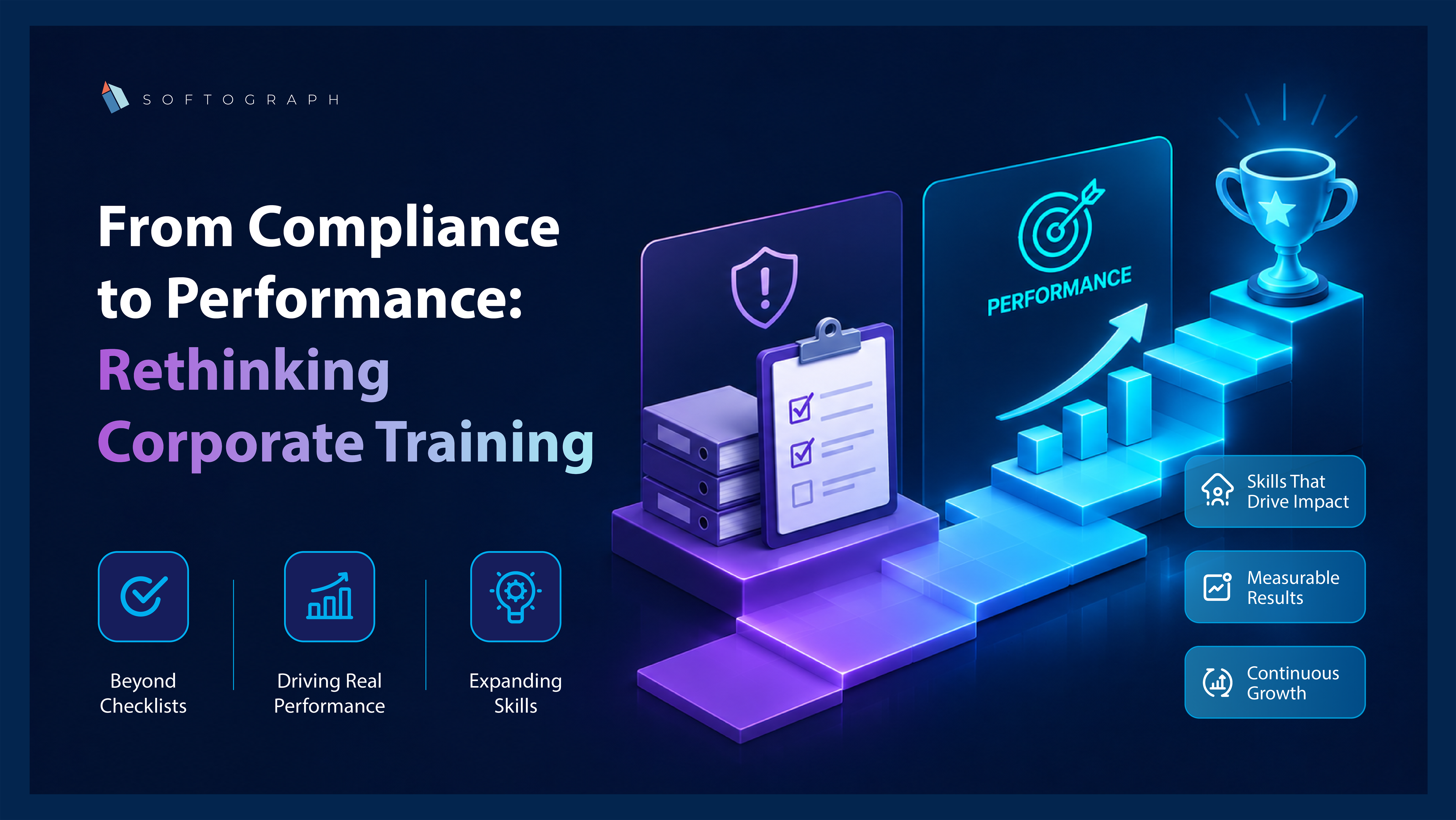
Every year, enterprise organizations waste millions on corporate training programs that check boxes while ignoring real-world performance.
Leaders often treat learning and development as a simple regulatory shield. However, traditional completion metrics fail to drive actual business outcomes. Employees skim through endless video modules, pass basic quizzes, and return to work without building new skills. As a result, companies face stagnant productivity and declining engagement.
To thrive in today’s competitive market, local business leaders must transform training from a passive administrative burden into a dynamic growth engine.
1. The Costly Trap of Box-Ticking Compliance
Most corporate learning management systems measure attendance instead of ability. Executives celebrate 98% course completion rates, yet operational performance remains completely unchanged. This disconnect creates a dangerous illusion of progress.
Traditional platforms focus heavily on regulatory tracking. They treat every employee like an identical unit in an assembly line. For instance, a senior engineer often receives the exact same safety or software onboarding module as a fresh entry-level hire. Consequently, high performers lose time, while struggling workers miss critical depth.
Furthermore, passive learning creates rapid skill decay. Studies show that employees forget 70% of new information within 24 hours without practical application. Compliance-focused training simply accelerates this waste. Businesses pay twice: first for the software platform, and second for the lost productive hours of their workforce.
2. Personalized AI Paths: Moving Beyond Static Courses
Modern enterprises require agile learning systems that adapt to individual employee needs. Artificial intelligence now makes personalized skills development scalable across thousands of workers simultaneously.
This transition is where Forge, a premium B2B AI learning management platform designed by Softograph, transforms the status quo. Instead of pushing rigid course catalogs, Forge creates dynamic adaptive learning paths for enterprise teams. The platform analyzes existing skill gaps, evaluates real-time performance, and automatically delivers tailored learning content.
For example, when an employee struggles with a specific technical capability, Forge detects the gap immediately. The platform adjusts the curriculum difficulty and provides targeted micro-learning interventions. Therefore, learning occurs within the flow of daily work rather than through massive, disruptive training seminars.
3. Measuring What Matters: Output Over Completion
To build a high-performing organization, business leaders must revamp their core L&D metrics. HR departments must stop tracking platform hours and start measuring operational output.
Real performance development connects directly to key business indicators. For instance, effective sales training should increase deal velocity. Technical onboarding should reduce software delivery errors. Compliance training should lower operational risks, not just log user activity.
By leveraging intelligent analytics, tools like Forge link course engagement with real-world job execution. Managers gain clear, data-driven visibility into team readiness. As a result, leadership can make proactive talent decisions based on proven capabilities rather than empty completion certificates.
Key Executive Takeaway: Completion rates measure activity; skill acquisition measures capability. Align your L&D metrics with operational output to ensure real business ROI.
4. Building an Integrated Enterprise Learning Ecosystem
Technology alone cannot fix a broken corporate culture. True digital transformation requires a seamless alignment between technology, people, and processes.
This strategic philosophy forms the foundation of Softograph’s design approach. Softograph builds Forge to integrate directly into existing workplace ecosystems without adding administrative friction. When learning tools fit smoothly into everyday software routines, employee adoption rises naturally.
Moreover, sustainable performance growth demands continuous reinforcement. Managers must act as coaches who encourage practical application. Processes must reward employees who master new capabilities and drive business value.
Local business leaders must abandon the outdated compliance mindset today. By investing in modern, AI-driven learning architectures, enterprises can unlock hidden employee potential, accelerate innovation, and gain an enduring competitive advantage.