
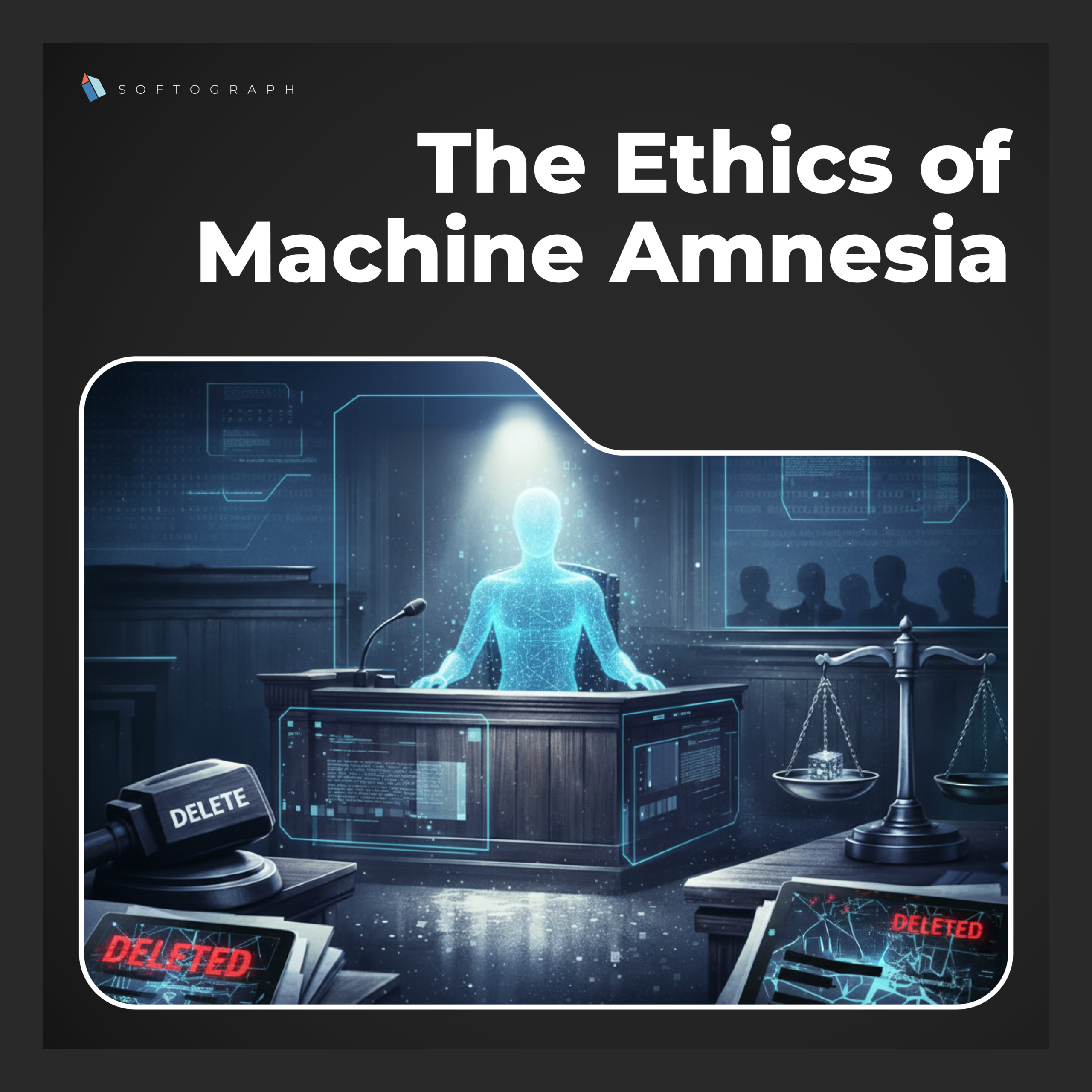
The Ethics of Machine Amnesia
For centuries, forgetting was human, but today, it is programmable.
In an age of cloud servers, neural nets, and ever-expanding data flows, “Machine Amnesia,” the deliberate removal of data by artificial approaches, presents more than a technical glitch. What happens when the machines we built forget, or worse, are designed to “shift + delete”? These systems can unlearn data, let knowledge decay over time, and even redact digital history. This shift raises urgent questions about privacy, accountability, and power. When machines can choose what to remember and what to erase, who decides which memories survive? How do we hold AI accountable for what it forgets, or fails to forget?
We feed machine learning platforms terabytes of information, trusting them to remember, categorize, and analyze. The UK’s privacy authority warned companies that some AI systems could break GDPR rules, especially regarding personal data and deletion. Security experts say it is possible to trick algorithms into revealing confidential information by changing the inputs they receive. (1) AI no longer just stores training data temporarily; it can remember information longer than expected and use it to learn and adapt. This means machines may hold on to sensitive details even when we think they have forgotten. Enterprises must design AI carefully to protect privacy and avoid unintended leaks. The future of machine forgetting is becoming real, and businesses cannot ignore its risks. (2)
Some AI models use data policies to anonymize data while keeping useful statistical patterns. “Machine unlearning” is a relatively new area of research that aims to have programs “forget” specific information entries without requiring them to be reconfigured from the outset. People rely on AI memory for predictive text, recommendations, and habit tracking. There is a single line between forgetting “willingly” and “sparingly,” as, for one, we lose continuity, and, for the latter, we risk privacy violations, persistent biases, and even surveillance.
Future AI could forget over time, like human synapses, keeping important data and discarding the rest. This kind of engineering would require ethical governance, with open protocols, transparency, and enhanced privacy algorithms. However, discarding data may cause issues with biases, harmful content, or lost opportunities for study. This kind of irreversible amnesia might ultimately result in a lack of transparency. The ethical debate over machine forgetting centers on the “right to be forgotten.” AI can erase data, but it may also forget lessons or patterns that protect users. Companies must decide what information to keep and what to delete. When machines forget, humans still hold responsibility for the consequences. This creates a tension between privacy, accountability, and the power AI holds over information. As AI systems gain the ability to choose what to remember, we must carefully consider the rules and limits we set for them.
In the end, machine amnesia’s ethical considerations center on the paradox: we fear machines for remembering too much, yet we distrust them when they forget too easily. As AI systems scale, the ethics of machine amnesia will define how responsibly machines learn, retain, and forget information. We must design memory systems that are selective and resilient, balancing both renewal and clarity. In a future where algorithms choose what endures, forgetting might determine us all.